
Most restroom cubicle installations begin with optimism. On the day of handover, everything looks perfect. Panels are clean, doors close smoothly, and the washroom appears ready for long-term use. Yet in a large number of commercial buildings, this confidence fades quickly. Within one to two years, cubicles begin to show visible signs of failure swollen panels, misaligned doors, rusting hardware, loose fittings, and frequent maintenance complaints.
This pattern has become so common that many facility managers accept it as normal. In reality, it is not. Early cubicle failure is almost always the result of decisions made during planning, material selection, and installation not bad luck or misuse.
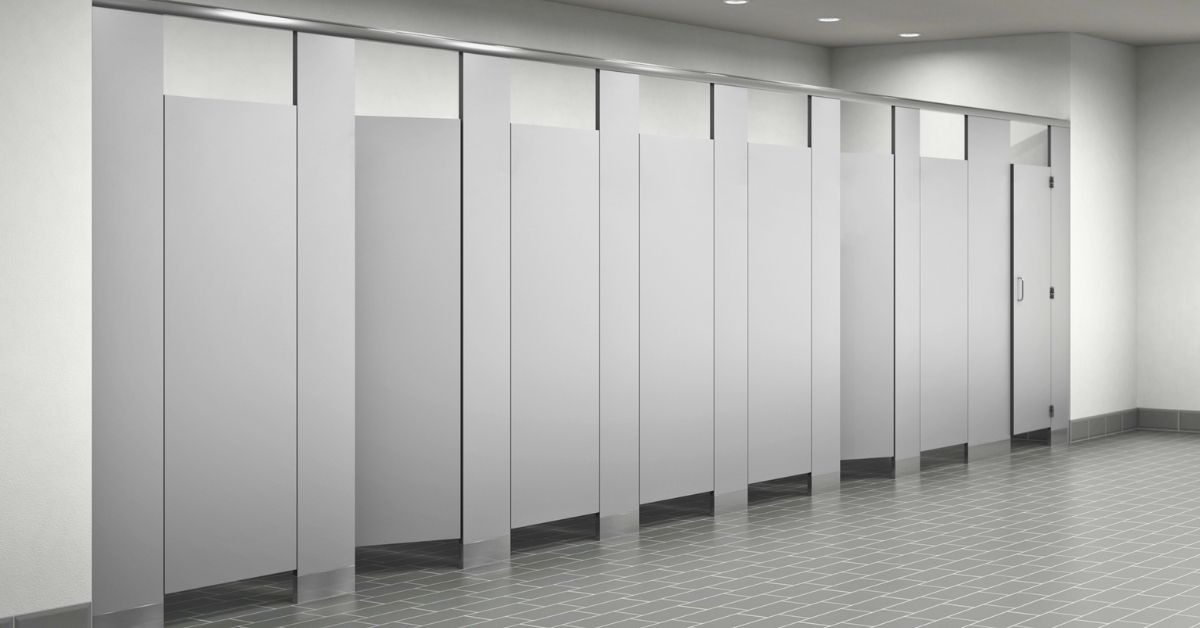
Early Cubicle Failure Is Rarely Caused by Users
One of the biggest misconceptions in commercial washroom management is that users are responsible for cubicle damage. In most environments offices, malls, hospitals, airports, and institutions users behave as expected. Cleaning teams follow daily routines involving water, disinfectants, and strong chemicals.
The real reasons cubicles fail early are far more structural. They include unsuitable materials, poor understanding of commercial usage patterns, low-quality hardware, and installation shortcuts. Cubicle systems that look similar on the surface can perform very differently once exposed to real operating conditions.
Material Selection Determines Cubicle Lifespan
The most common reason restroom cubicles fail within two years is incorrect material selection. Many cubicles are chosen based on appearance or initial cost rather than long-term performance. In Indian commercial washrooms, cubicles must withstand high humidity, temperature changes, frequent washing, and harsh cleaning chemicals.
When low-grade or non-moisture-resistant boards are used, water enters through panel edges, joints, and screw points. This causes internal damage long before visible signs appear. Once moisture reaches the core, the panel begins to lose strength, leading to swelling, warping, and structural instability.
This type of damage is irreversible. Surface repairs cannot restore the integrity of a water-damaged cubicle panel. Over time, stress transfers to hinges and locks, accelerating overall failure.
Ignoring Real Commercial Usage Patterns
Another major cause of early cubicle failure is a lack of understanding of how commercial washrooms are actually used. Offices experience concentrated peak usage. Shopping malls see continuous footfall throughout the day. Hospitals and healthcare facilities operate round the clock with frequent sanitation cycles.
Cubicle systems that are not engineered for these conditions suffer faster wear and tear. Doors are opened and closed thousands of times, hardware remains under constant load, and panels face repeated moisture exposure. When usage patterns are underestimated, cubicle lifespan reduces dramatically.
Installation Quality Is as Important as Materials
Even high-quality cubicle materials can fail if installation is poor. Misalignment during installation creates uneven load distribution, placing constant stress on hinges, brackets, and support legs. Over time, doors sag, locks stop aligning, and users experience difficulty while using the cubicle.
One of the most overlooked installation details is floor clearance. In commercial washrooms, water on the floor is unavoidable. Panels installed too close to the floor absorb moisture during every cleaning cycle. This daily exposure silently weakens the structure and shortens the cubicle’s life.
Proper clearance allows water to flow freely and prevents long-term moisture absorption. Cubicle systems that ignore this basic principle almost always fail prematurely.
Hardware Quality Is a Silent Performance Factor
Cubicle hardware plays a critical role in long-term performance. Hinges, locks, brackets, and support legs carry continuous physical stress. In many installations, hardware is selected based on price rather than durability.
Low-quality metal components corrode quickly in humid washroom environments. Rust increases friction, restricts movement, and weakens mechanical strength. Once hardware performance drops, the entire cubicle feels unstable, leading to frequent complaints and repairs.
Lack of Integration and After-Installation Support
Another overlooked reason for early cubicle failure is the lack of coordination between design, supply, and installation. When restroom cubicles are treated as standalone items instead of critical washroom infrastructure, important technical details are missed.
Post-installation support is often absent. After handover, many vendors disengage, leaving facility teams without guidance on compatible cleaning methods, maintenance practices, or early warning signs of failure. Small issues that could have been corrected early escalate into major replacements.
Why Performance-Focused Cubicle Systems Last Longer
Cubicle systems that perform reliably beyond two years follow a clear, performance-driven approach:
-
Use of moisture-resistant, non-porous materials
-
Corrosion-resistant, heavy-duty hardware
-
Proper floor clearance and precision installation
-
Designs aligned with real commercial usage patterns
-
Ongoing technical support after installation
Facilities that invest in such systems experience fewer failures, lower maintenance costs, and predictable performance. Washrooms remain hygienic, functional, and dependable even under heavy usage.
Restroom Cubicles Must Be Treated as Infrastructure
The most important takeaway is simple: restroom cubicles are functional infrastructure, not decorative elements. Treating them as infrastructure changes every decision from planning and material selection to installation and long-term maintenance.
Facilities that adopt this mindset avoid the costly cycle of installation, failure, repair, and replacement. Instead, they achieve stable performance, controlled maintenance budgets, and better user satisfaction.
Building Cubicles That Are Designed to Last
At Bilva Cubicle Solutions, restroom cubicles are designed with this long-term infrastructure mindset. Every system is developed for real commercial conditions—high humidity, heavy usage, frequent cleaning, and long service life.
Bilva Cubicle Solutions focuses on moisture-resistant materials, durable hardware, precision installation, and post-installation support to ensure cubicles perform reliably year after year. This approach helps facilities reduce breakdowns, avoid premature replacements, and maintain washrooms that function quietly and efficiently.
Whether it is an office building, hospital, mall, educational institution, or public facility, choosing the right cubicle solution makes all the difference.
If you are planning a new washroom or upgrading an existing one, choose cubicle systems built for real-world performance. Partner with Bilva Cubicle Solutions and invest in restroom infrastructure designed to last.